
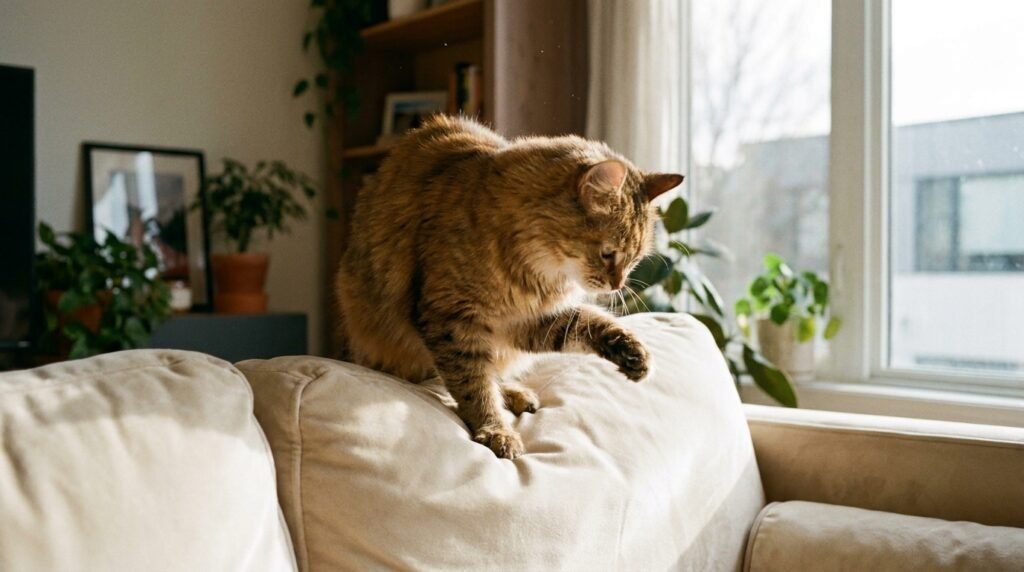
Have you ever wondered why your cat kneads before sleep? Cat kneading before sleep is a common and comforting behavior that many cats show before settling down. But what does it actually mean, and when could it be a sign that something is wrong?
This is known as cat kneading, and it’s one of the most common — and most puzzling — behaviors cats have. It might look cute, but it actually traces back to kittenhood and ties into a cat’s instincts, along with how safe and comfortable she feels around you. So what does it actually mean? And could it, in some cases, be something to worry about?
In this article, we’ll go over the main reasons cats knead before sleep, what the behavior can tell you about your cat’s mood, and how to tell a normal, harmless habit apart from one that might call for a vet visit.
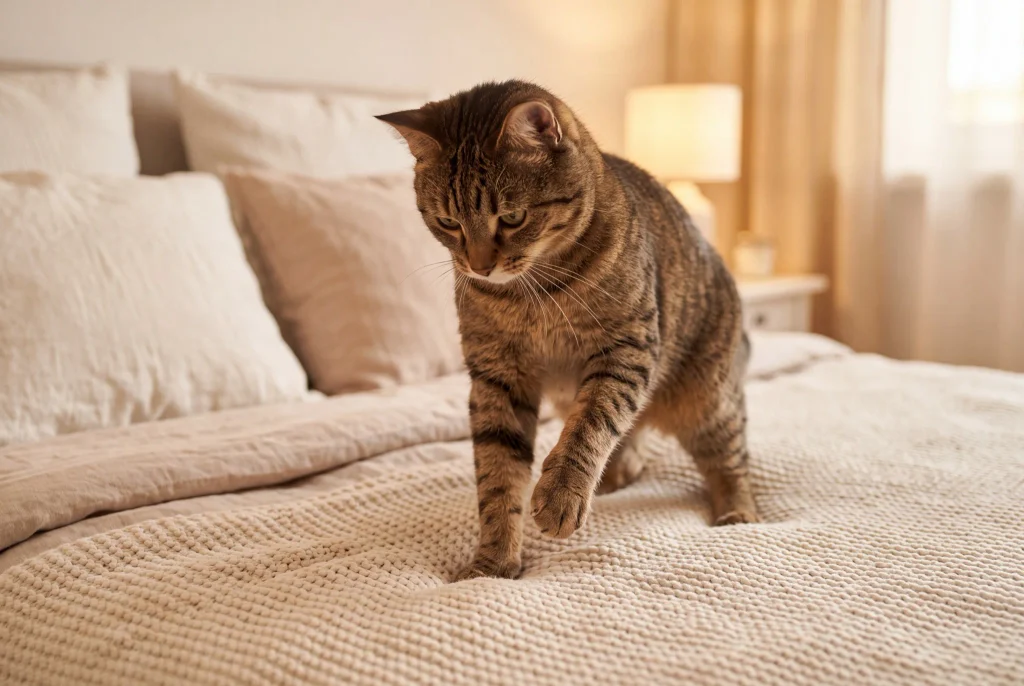
What does cat kneading mean?
Kneading is a rhythmic motion where a cat pushes her front paws in and out against a soft surface, usually alternating between her right and left paw. Some cats keep their claws tucked in while they do it, while others extend them slightly — which is why you might feel a bit of a pinch when your cat decides your lap is the perfect place to knead.
This behavior goes by a few names — kneading, paw pressing, “making biscuits” — and cats tend to look for soft surfaces to do it on: blankets, pillows, furniture, clothes, even a person’s stomach or leg.
Where does this behavior come from?
It shows up early, and you can already see it in newborn kittens kneading their mother’s belly while nursing — the motion helps milk flow, which is what links kneading in a cat’s mind to comfort, food, and safety.
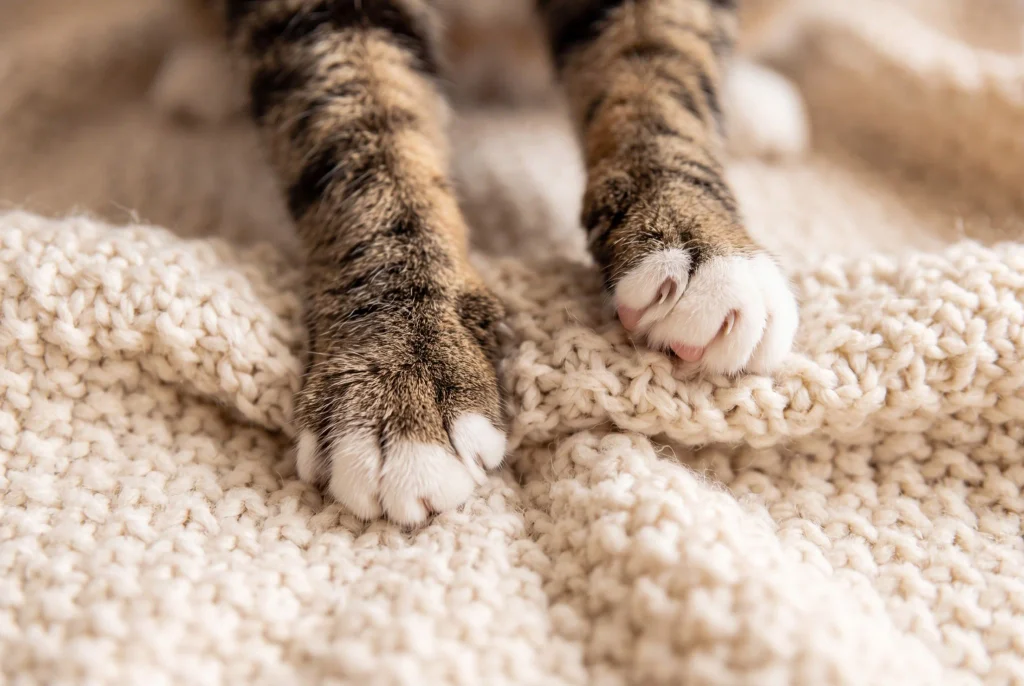
Cats don’t really grow out of it as they age. It just becomes something they keep doing whenever they feel warm and at ease.
Is kneading normal for cats?
Yes, completely. It’s common across cats of every age and breed. Some do it daily, some only once in a while, and some barely ever — all of that is normal, and none of it is cause for concern.
Why Does Cat Kneading Before Sleep Happen?
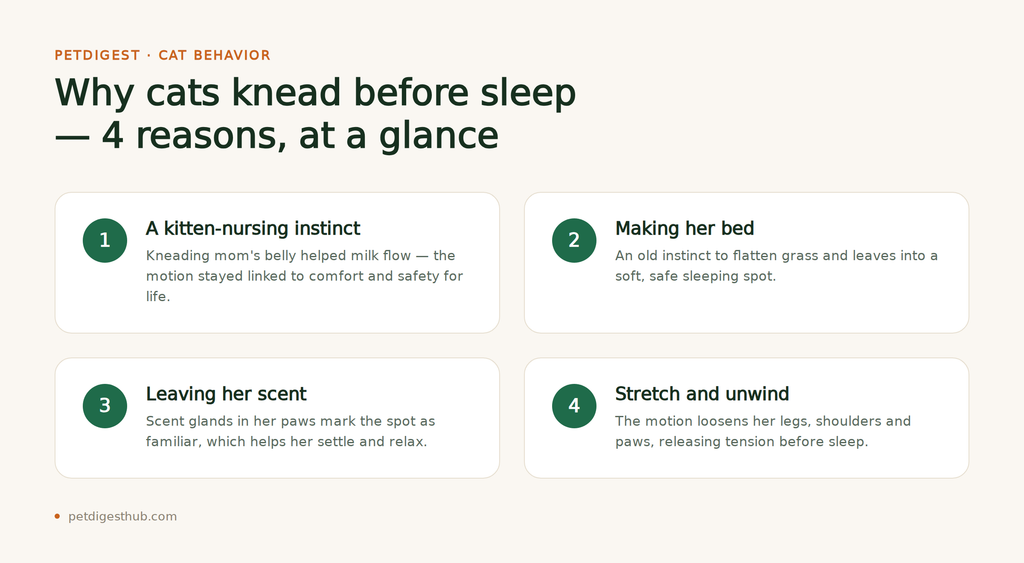
There’s no single explanation, since most cats knead for more than one reason at once. Here are the four most common:
1. A habit picked up in kittenhood
Newborn kittens knead their mother’s belly while nursing, since it helps the milk flow — which links the moment of kneading, in the cat’s mind, to warmth, food, and safety. That’s why so many adult cats bring the motion back whenever they feel calm and reassured.
And since bedtime is the quietest part of a cat’s day, it makes sense that the behavior tends to show up then. So if your cat settles into your lap and starts kneading your leg, take it as a good sign — it usually means she trusts you and feels safe near you.
2. Preparing her ideal sleeping spot
Long before cats had blankets and beds, they pressed down on grass and rough leaves to flatten out a soft, safe place to rest. Your cat may have a comfortable blanket and a warm bed today, but she still holds on to that instinct.
So she’s essentially wired to “fix up” her sleeping spot whenever it feels rough to her, making sure it’s comfortable before she lies down and sinks into deep sleep.
3. Leaving her scent behind
A cat’s paws carry scent glands, so kneading lets her leave her own scent wherever she’s doing it. That gives the spot a sense of safety and familiarity, which helps her relax and fall asleep. For more information, VCA Animal Hospitals explains why cats knead.
4. Kneading helps her stretch and unwind
The pressing and pulling motion works the muscles in her legs, shoulders, and paws, similar to how we stretch before bed. That stretch helps cats release tension and loosen up before they curl into a ball and drift off.
Why specifically before sleep?
Cats sleep up to 16 hours a day, and like most animals, they follow a small routine before dozing off: circle the spot a bit, knead, curl up, then sleep. This is why cat kneading before sleep is such a common part of their bedtime routine. It helps her shift from being alert and watchful to calm and ready for rest.
When should we worry? (Signs that call for attention)
In general, kneading stays a normal behavior in most cats, but in some cases it can point to something that needs attention. Here are a few of those cases:
Compulsive, excessive kneading: If a cat is kneading forcefully and nonstop, without pausing, that can be a sign of chronic anxiety or deep inner tension.
Kneading accompanied by pain: If you notice signs of discomfort during kneading — excessive licking, limping, or reluctance to move afterward — there may be pain or inflammation in her paws or joints.
Kneading with tension or aggression: Normal kneading comes with contentment and relaxation. But if your cat shows signs of tension and agitation while doing it — ears pinned back, a tail moving excessively, or aggressive behavior like biting and scratching hard — that can mean she’s uncomfortable and dealing with something.
A sudden change in behavior: If your cat doesn’t normally knead and suddenly starts, that sudden shift can be a warning sign worth a prompt vet visit, especially if it comes with symptoms like reduced appetite, lethargy, or unusual aggression.
Practical tips
Protect yourself from her claws
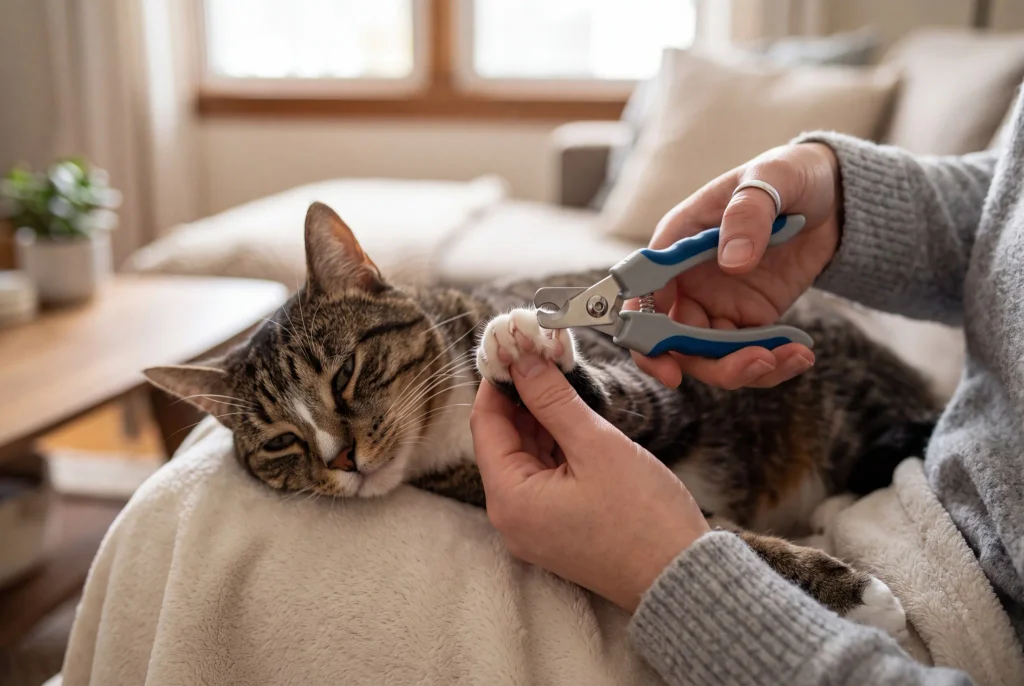
Trim your cat’s nails regularly, about every two weeks, to keep them from getting too sharp. Use clippers made for cats — a vet or grooming salon can also do this for you.
If your lap is her favorite kneading spot, keep a blanket or thick cover over your legs. It protects you from the scratches this can cause.
Give her a sleeping spot of her own
Set up a quiet area with a pillow or soft blanket. This can make cat kneading before sleep more comfortable and give her a dedicated place to relax instead of kneading on you or your furniture.
Don’t punish her for kneading
Kneading is instinctive, so even if your cat doesn’t seem to do it often, she might start at any moment — and you may not be ready for it. Treat it as normal, and don’t punish her or stop her from acting on instinct.
How to gently move her away if it hurts
If she starts kneading in your lap and her claws are hurting your leg, move her away gently rather than pushing her off. You can also shift the position of your legs to avoid getting scratched, or give her a soft toy or cushion to knead on instead of your body.
Frequently asked questions
Why does my cat knead me before sleeping?
She most likely learned this as a kitten, kneading her mother’s belly to help milk flow. She’s kept the motion since then as a way to relax and feel safe before sleep, and she does it whenever she feels warm and trusting.
Should I stop my cat from kneading?
No, you shouldn’t. Kneading is a natural, instinctive behavior for cats, and it may even be good for them. Stopping or preventing it could cause her stress. A better approach is to guide the behavior — trim her nails and give her a dedicated spot with a blanket or cushion to knead on safely.
Why does my cat knead and bite?
Sometimes kneading comes with a light nibble, which is normal and not necessarily a sign of aggression. But if the biting is hard and comes with tense body language — ears pinned back, a tail moving excessively — that’s a different behavior worth paying attention to.
Is kneading a sign of love?
Yes, in most cases. Kneading tends to happen when a cat is relaxed and at ease, often directed at the person or place that makes her feel safe. It’s considered a sign of trust and attachment.
Conclusion
Cat kneading isn’t just some random habit — it’s an instinctive act that’s stayed with her since her nursing days, one she returns to whenever she feels safe and wants to unwind. So let her have her moment, and just watch from a distance.
Next time you catch your cat kneading, smile. It’s usually a sign that she trusts you and feels safe being close to you.